Which Mineral Sunscreens Make a Non-Nano Particle Claim?
Last updated October 27, 2026
A non-nano claim records what the manufacturer says about its mineral particles; it does not independently establish particle size, SPF or greater safety.
Thinkbaby, Thinksport, Raw Elements and other manufacturers make explicit non-nano claims. Below are 14 such claims and one “micronized” comparison, read on 27 October 2026, with the exact wording and its source. All 15 formulas list zinc oxide as their only sunscreen active. We checked labels and brand statements; we did not measure particles or test these sunscreens.
| SPF | Product | Actives as printed (%) | Particle claim, verbatim | Where the claim was read | Format |
|---|---|---|---|---|---|
| 50 | Thinkbaby Baby Sunscreen (link opens 6 fl oz; label SPF 50, listing title 50+) | Zinc Oxide 23.4% | “non-nano mineral” | FDA label image Full label / Drug Facts |
Baby lotion |
| 50 | Thinksport Sunscreen (3 fl oz label; Amazon availability not confirmed) | Zinc Oxide 23.4% | “non-nano mineral” | FDA label image Full label / Drug Facts |
Body lotion |
| 50 | Thinkkids Kids Sunscreen (link opens 3 fl oz; label SPF 50, listing title 50+) | Zinc Oxide 23.4% | “non-nano mineral” | FDA label image Full label / Drug Facts |
Kids lotion |
| 30 | Thinkbaby Sunscreen Stick (0.64 oz label; no matched available Amazon listing) | Zinc Oxide 24% | “non-nano zinc oxide” | FDA label image: carton Full label / Drug Facts |
Stick |
| 30 | Thinksport Sunscreen Stick (0.64 oz label; no matched available Amazon listing) | Zinc Oxide 24% | “non-nano zinc oxide” | FDA label image: carton Full label / Drug Facts |
Stick |
| 30 | Raw Elements Face + Body (link opens 3 oz tube) | Non-Nano Zinc Oxide 23% | “Non-Nano Zinc Oxide” | Brand product page (ingredients) | Face + body lotion (tube) |
| 30 | Raw Elements Daily Moisturizer (2.75 fl oz label; untinted, with hemp and argan oils; no matched Amazon listing) | Zinc oxide 20% | “NON NANO ZINC OXIDE” | FDA label image Full label / Drug Facts |
Face + body lotion |
| 30 | Raw Elements Baby + Kids (link opens 3 oz tin) | Non-Nano Zinc Oxide 25% | “Non-Nano Zinc Oxide” | FDA label image Full label / Drug Facts |
Baby/kids lotion (tin) |
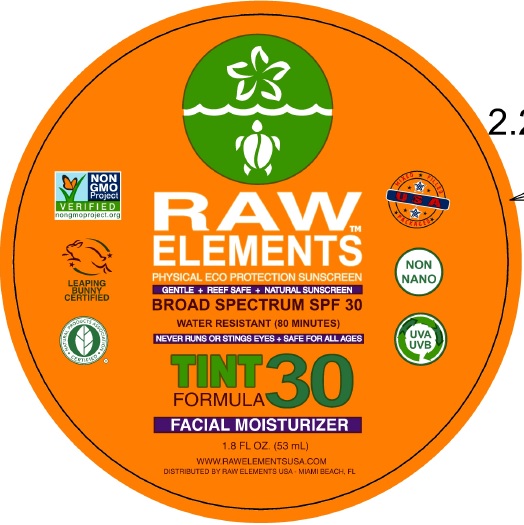
| 30 | Raw Elements Tint 30 Facial Moisturizer (1.8 fl oz label; no matched Amazon listing) | Zinc oxide 23% | “NON NANO” | FDA label image Full label / Drug Facts |
Tinted face cream |
| 50 | Pipette Mineral Sunscreen (Water Resistant 80 Minutes) (link opens two 3 fl oz tubes; label image is 6 fl oz, same 20.1% active) | Zinc Oxide 20.1% | “non-nano zinc oxide” | FDA label image Full label / Drug Facts |
Lotion |
| 50+ | ATTITUDE Sunly Mineral Sunscreen Face Stick, Unscented (0.53 oz bilingual label; no matched Amazon listing) | Zinc oxide 24% | “NON NANO” | FDA label image: carton Full label / Drug Facts |
Face stick |
| 50 | Babo Botanicals Sensitive Baby Mineral Sunscreen Lotion (link opens 3 fl oz) | Zinc Oxide 20.0% | “non-nano mineral filters” | Brand product page (FAQ) Full label / Drug Facts |
Baby lotion |
| 50 | Babo Botanicals Super Shield Mineral Sunscreen Lotion (link opens 3 fl oz; listing title says Sheer Mineral) | Zinc Oxide 20.0% | “non-nano mineral filters” | Brand product page (FAQ) Full label / Drug Facts |
Body lotion |
| 50 | Babo Botanicals Daily Sheer Mineral Sunscreen Fluid (link opens untinted, 1.7 fl oz) | Zinc Oxide 20.6% | “non-nano mineral filters” | Brand product page (FAQ) Full label / Drug Facts |
Face fluid |
| 50 | EltaMD UV Skin Recovery (link opens Untinted, 1.7 oz; micronized is not a non-nano declaration) | Zinc Oxide 12.9% | “micronized zinc oxide” | FDA label image: carton Full label / Drug Facts |
Face lotion |




How to read the table. The first 14 rows carry non-nano wording; the final row is a micronized comparison. “FDA label image” means manufacturer-submitted artwork hosted on DailyMed, not FDA verification of the particle claim. Babo’s non-nano wording comes from its own product-page FAQ, not the carton. Percentages come from the printed Drug Facts, except Raw Elements Face + Body, whose brand ingredient list supplies both the percentage and claim. Nine product names link to Amazon US listings checked as available; the six unlinked rows are label examples without a matched available listing. Compare the package you receive with the cited source, especially when changing size or formula.
What do nano and non-nano mean?
In EU cosmetics law, a nanomaterial is intentionally manufactured, insoluble or biopersistent, and has at least one external dimension or an internal structure in the 1–100 nm range. Article 2(1)(k) of Regulation (EC) 1223/2009 supplies that definition. Article 19(1)(g) requires nanomaterial ingredients to be identified with “(nano)” after the ingredient name in the ingredient list, for example “Titanium Dioxide (nano)”. We read these articles in the EU text as consolidated to 30 December 2020 (the UK National Archives’ point-in-time copy, before any UK amendment); the European Commission’s cosmetics guidance also explains the definition and labeling rule.
That EU requirement is not a universal definition of a US “non-nano” marketing claim. The FDA’s nanotechnology guidance says it has not established regulatory definitions for nanomaterial and related terms. Its assessment considers engineered dimensions around 1–100 nm and can also consider size-dependent properties at dimensions up to 1,000 nm. These are assessment considerations, not a sunscreen-label certification.
We did not find an EU-style “(nano)” declaration requirement in the FDA sunscreen labeling guidance reviewed for this guide. The agency’s 2007 Nanotechnology Task Force report recommended handling nano labeling case by case, rather than requiring it across all products. A US ingredient list that simply says zinc oxide or titanium dioxide therefore does not establish particle size.
Micronized is not a measured particle-size result
EltaMD UV Skin Recovery’s 1.7 oz carton says “micronized zinc oxide.” We found no numerical size in that statement and do not count it among the 14 non-nano claims. Likewise, “clear zinc” and “uncoated” are not numerical size disclosures. Badger Active Face Stick’s artwork prints those descriptions, but its typed DailyMed text adds “Non-Nano”; we left it out of this table rather than present the typed wording as a printed-label claim. MDSolarSciences Mineral Crème’s Amazon title says “micronized,” but we could not confirm a particle claim in the brand product-page text we read, so it is also omitted.
No row here supplies an independently verified size distribution, and we did not verify a product explicitly labeled “nano” or a titanium-dioxide-specific non-nano claim for this table. For products with either mineral, see the broader mineral sunscreen list.
Nano versus non-nano: transparency is not a safety ranking
Smaller mineral particles can reduce visible whitening; larger particles tend to leave more white cast. Smijs and Pavel’s review explains how particle size, aggregation, coatings and the surrounding formula affect optical behavior. It does not establish that a non-nano claim makes a sunscreen safer. Smijs and Pavel, 2011, Nanotechnology, Science and Applications 4:95–112.
The FDA’s product-specific approach likewise does not classify all nanotechnology products as inherently harmful or harmless. Choose particle wording as a preference, not a safety score. The labeled SPF and broad-spectrum claim describe protection testing of the finished formula; the mineral percentage and particle claim do not replace them. Our nano-minerals explainer discusses the transparency and safety questions.
Our Verdict
Use this list to find a documented particle claim, then compare the finished sunscreen’s labeled SPF and directions; the claim itself is not a safety rating.
Pros
- Exact particle wording is linked to the source where we read it
- Every listed formula has zinc oxide as its only labeled sunscreen active
Cons
- Manufacturer claims are not independent measurements
- Micronized alone does not establish whether particles meet a nano definition
Frequently Asked Questions
Which sunscreens state non-nano or zinc particle size on the label?
The table records 14 non-nano claims from label images or brand product pages, plus EltaMD UV Skin Recovery’s micronized wording. Thinkbaby and Thinksport print non-nano on the label; Babo’s claim comes from its product-page FAQ. The source column makes that distinction explicit.
What does non-nano zinc oxide mean in mineral sunscreens?
It is a manufacturer’s statement that its zinc oxide is not a nanomaterial under the definition it uses. We have not measured these products. The EU cosmetics definition covers intentionally manufactured, insoluble or biopersistent material with an external dimension or internal structure of 1–100 nm; FDA’s nanotechnology guidance does not establish a regulatory definition.
Is this a nanoparticle-free sunscreen list?
It is a list of documented manufacturer claims, not laboratory confirmation that every particle is above a size threshold. The micronized comparison row is not classified as non-nano. A missing claim also does not establish that a sunscreen contains nanoparticles.
Is micronized zinc oxide the same as non-nano?
The word alone does not establish that. EltaMD’s carton says micronized zinc oxide but supplies no numerical particle size in that statement, so we preserve its wording without assigning a nano or non-nano classification.
Is nano zinc oxide safe?
Particle size alone is not a safety verdict. FDA’s nanotechnology guidance evaluates products in context and does not treat all nanotechnology products as inherently harmful or harmless. A non-nano label is not evidence that a finished sunscreen is safer than a nano formula.